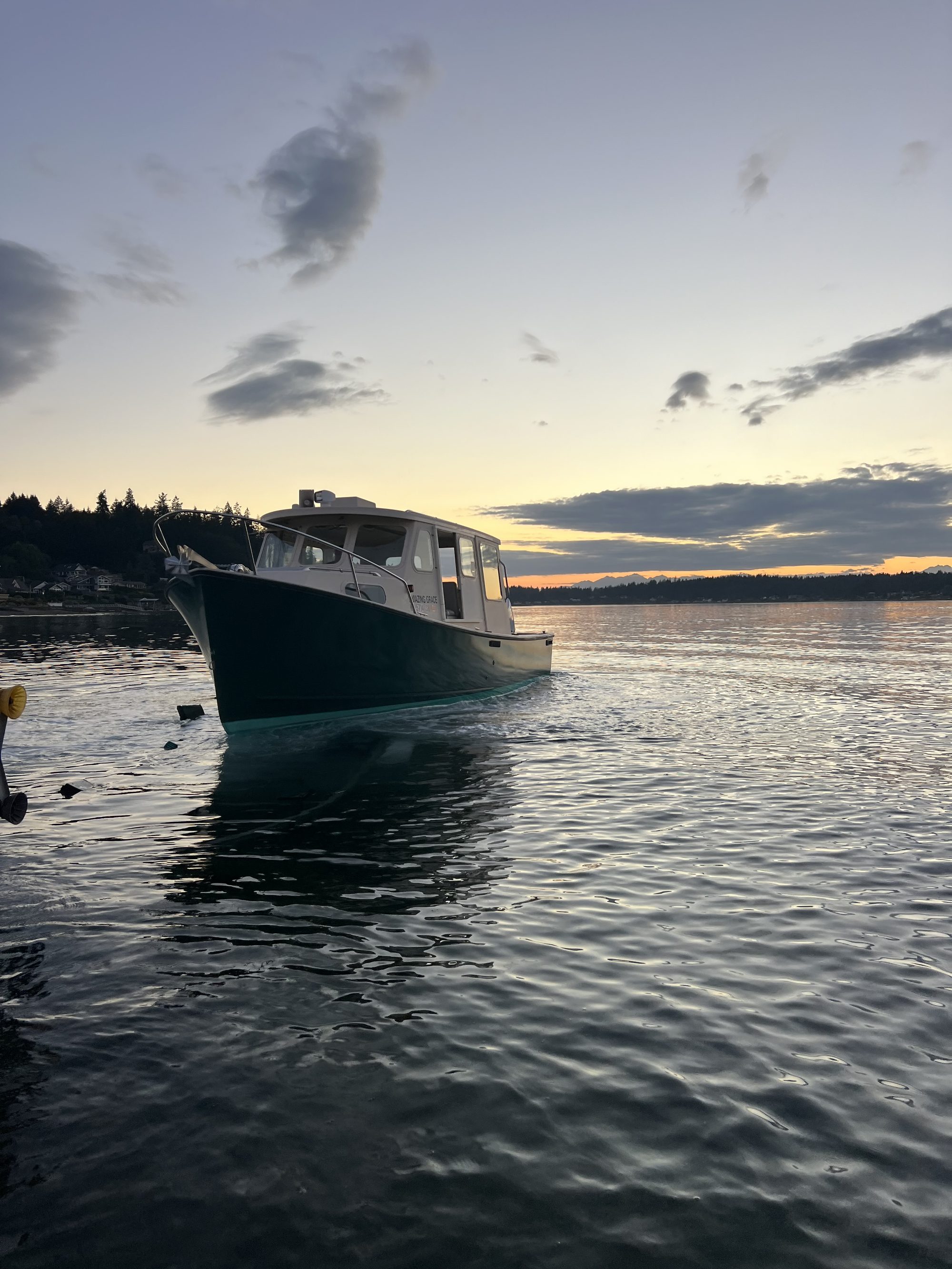
Amazing Grace
Rosborough RF-246
A thoughtfully evolved Pacific Northwest expedition cruiser built around simplicity, reliability, and independence.
Amazing Grace has been continuously refined over three decades with a single guiding philosophy: every modification should increase reliability, simplify operation, or improve the cruising experience.
She is not defined by expensive equipment. She is defined by carefully considered decisions. Every change answers one question — does this make the boat simpler, safer, more reliable, or more enjoyable to cruise? What follows is the record of those decisions, and the reasoning behind them.
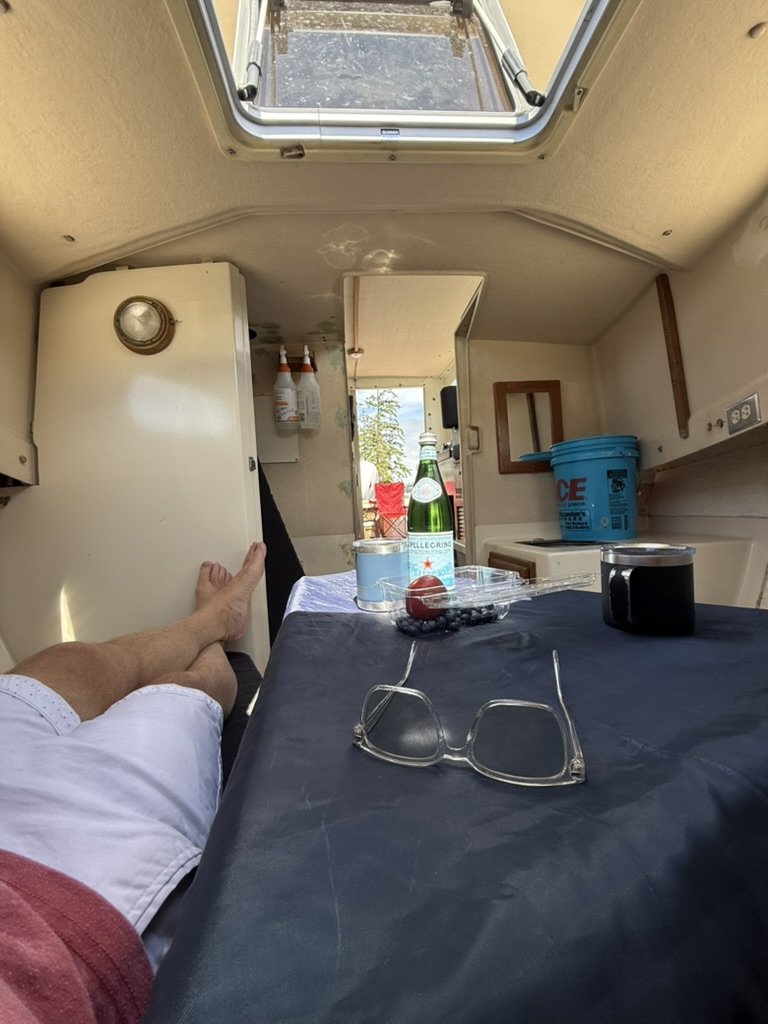
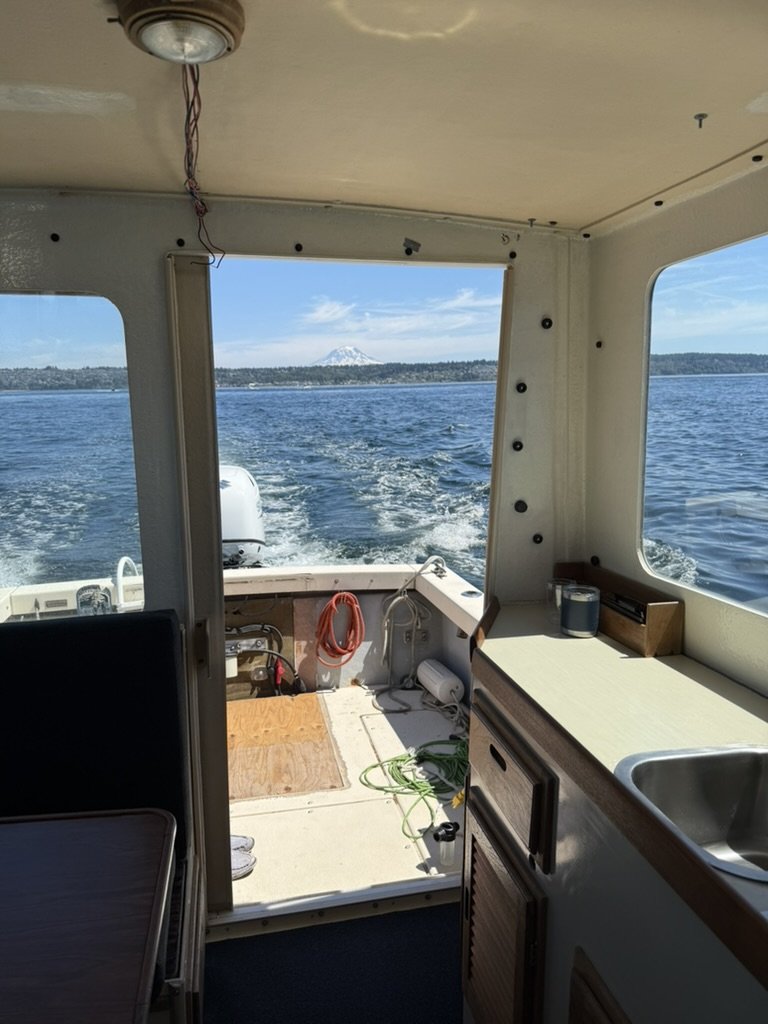
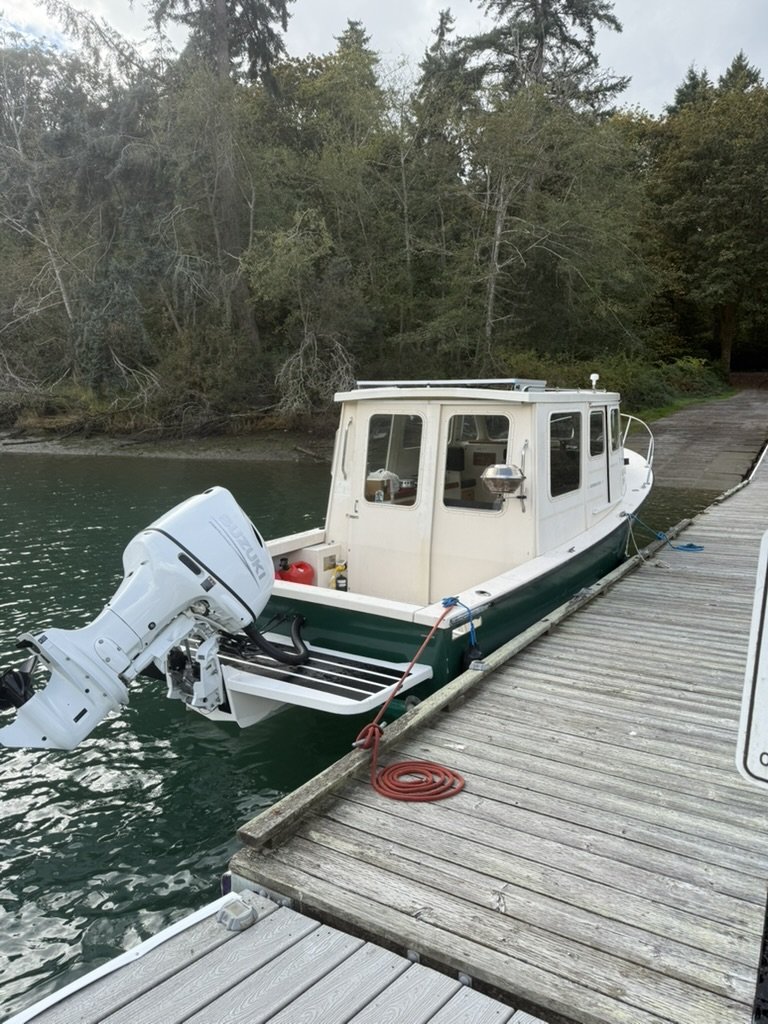
2023 Suzuki DF140
Power was chosen for quiet operation and long-term reliability over outright speed. The DF140's electronic fuel injection and onboard diagnostics simplify troubleshooting underway, and its fuel economy extends range without adding tankage. It's a four-stroke built for a long service life with modest maintenance — the same priority behind every other system on board.
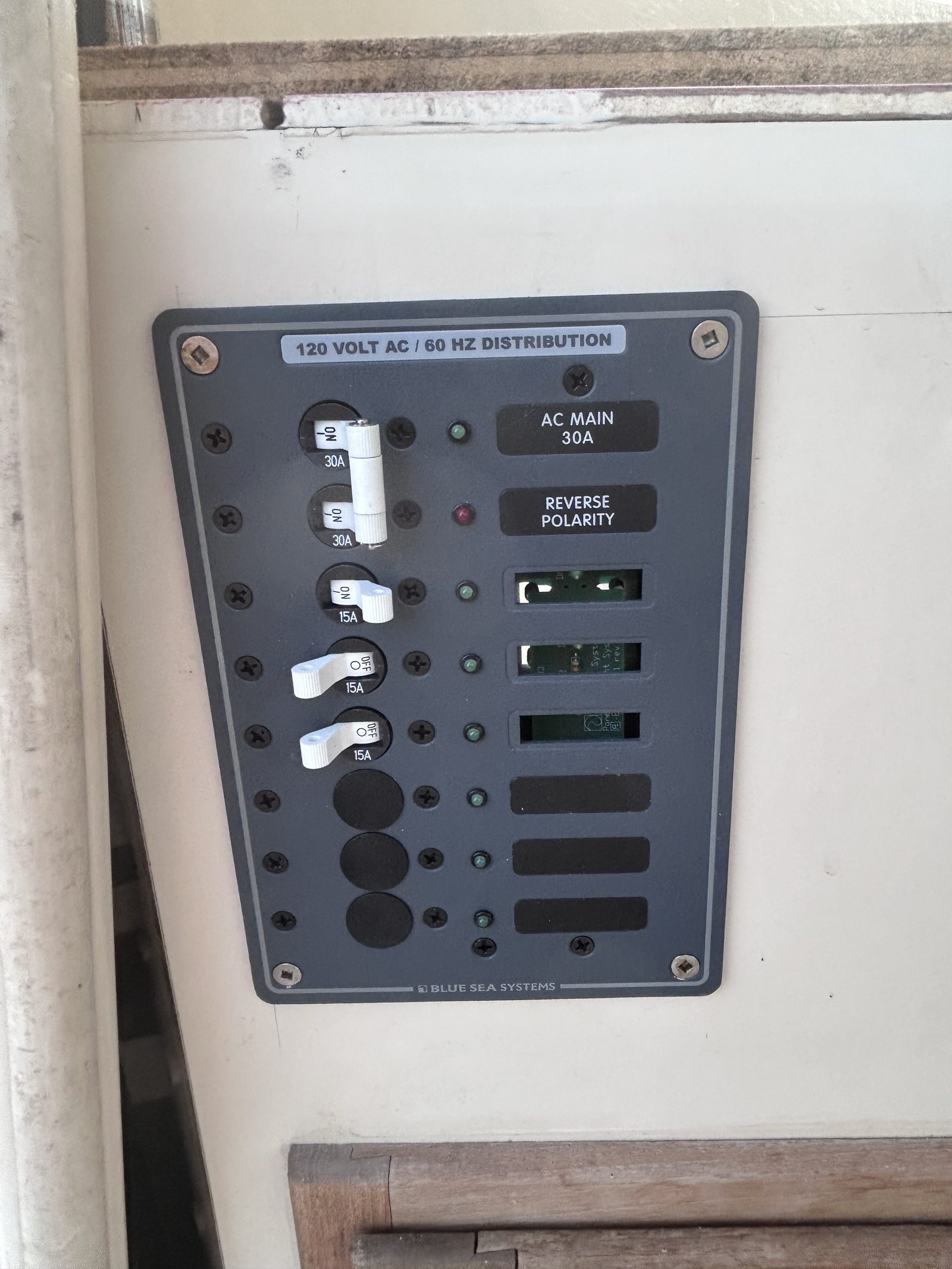
End-to-end marine-grade rewire
The entire vessel was rewired from the panel out, using Blue Sea Systems components throughout. This wasn't an upgrade to any single device — it was a redesign of the boat's electrical foundation, built around clean circuit protection, a layout that's simple to trace and service, and wiring that will still be trustworthy a decade from now. Craftsmanship here shows up as an absence of problems, not a feature list.
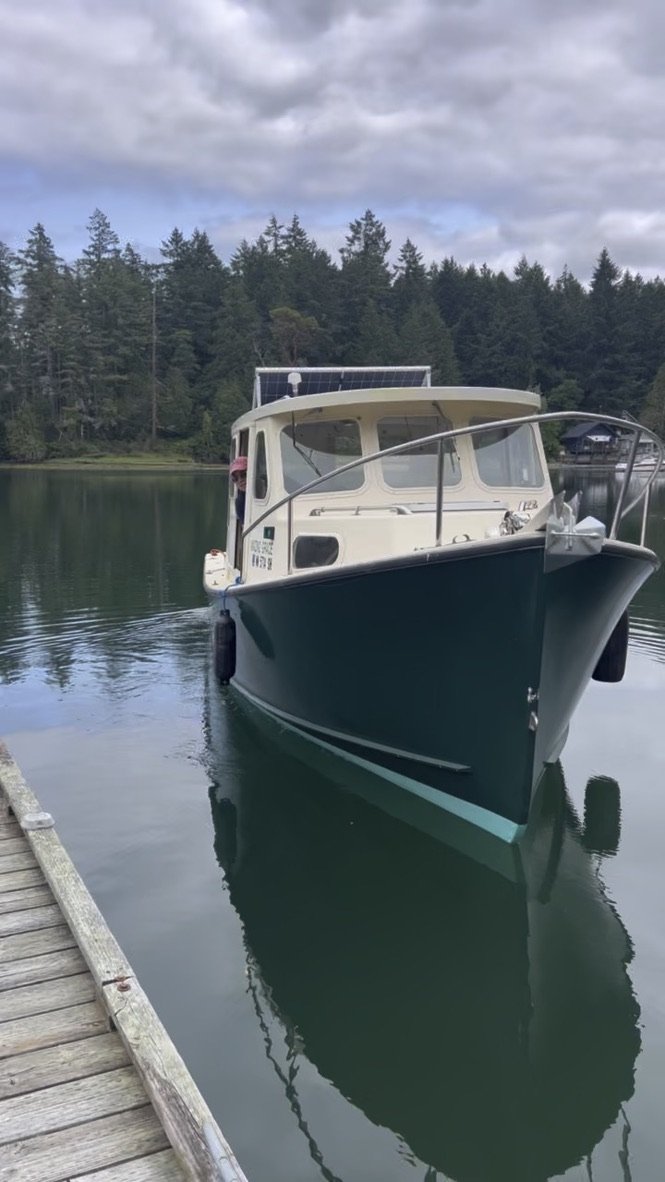
High-efficiency German panel · Victron SmartSolar
The goal of the solar installation was independence, not novelty: reduce generator dependence while keeping the battery bank healthy through every season at anchor. A high-efficiency panel feeds a Victron SmartSolar controller with Bluetooth monitoring, so charge state and performance are visible from a phone without opening a panel — optimized charging with none of the guesswork.
Fully integrated NMEA 2000 network
Rather than a collection of separate instruments, the helm runs on a single NMEA 2000 backbone — engine diagnostics, fuel data, speed, water temperature, depth, GPS, WiFi, Bluetooth, and Navionics all speaking to each other instead of living on their own screens. The value isn't any one instrument; it's the integration. One network, one source of truth, fewer places for something to fail quietly.
Planar diesel heater
Reliable, fuel-efficient, and built for exactly this climate. A dry, warm cabin through the shoulder seasons is what makes Pacific Northwest cruising comfortable rather than just tolerable — the Planar does that on very little fuel, with the combustion chamber kept outside the living space by design.
Origo 3000 alcohol stove
No propane on board. The Swedish-built Origo 3000 runs on denatured alcohol — no pressurized fuel lines, no shutoff solenoids, no combustible gas pooling in the bilge. It's a simpler, safer galley by design: fewer failure points, cleaner fuel, and one less system to worry about at sea.
Modern electric marine head
Replacing the original manual head with an electric unit was a small change with an outsized effect on daily convenience and long-term reliability — fewer moving parts to maintain by hand, and one less daily chore that gets old fast on a cruising boat.
Lamar Pro Series windlass
Confidence at anchor starts with equipment that works the same way every time. The Lamar windlass was chosen for straightforward, reliable operation — nothing exotic, just a system that sets and retrieves ground tackle without drama, trip after trip.
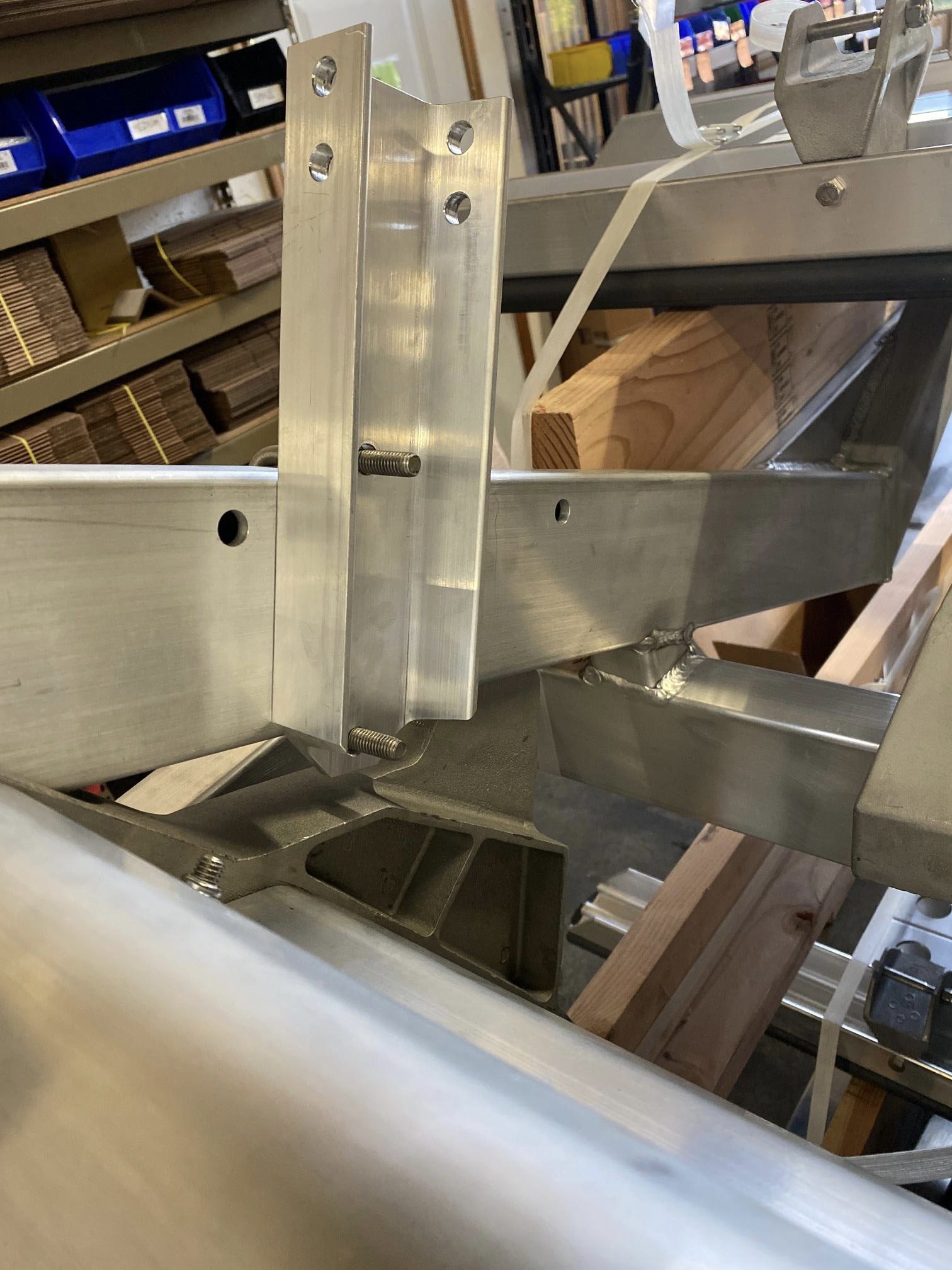
Pewter Marine transom bracket
A custom transom bracket, fabricated by Pewter Marine, improved the engine installation and freed up usable cockpit space that the stock arrangement didn't allow. It's the kind of change that's invisible in a walkthrough and obvious every time you're actually using the boat — professional fabrication, integrated to look like it was always part of the design.
The Rosborough RF-246 was built on a simple premise: a trailerable, capable, no-frills pocket cruiser, seaworthy enough for real coastal work and simple enough for two people to run without a crew. That premise hasn't changed in thirty years, and it hasn't changed on Amazing Grace either.
Every system documented here was chosen to build on that original vision, not replace it — reliability over complexity, seaworthiness over speed, and a boat that rewards understanding rather than one that demands it.
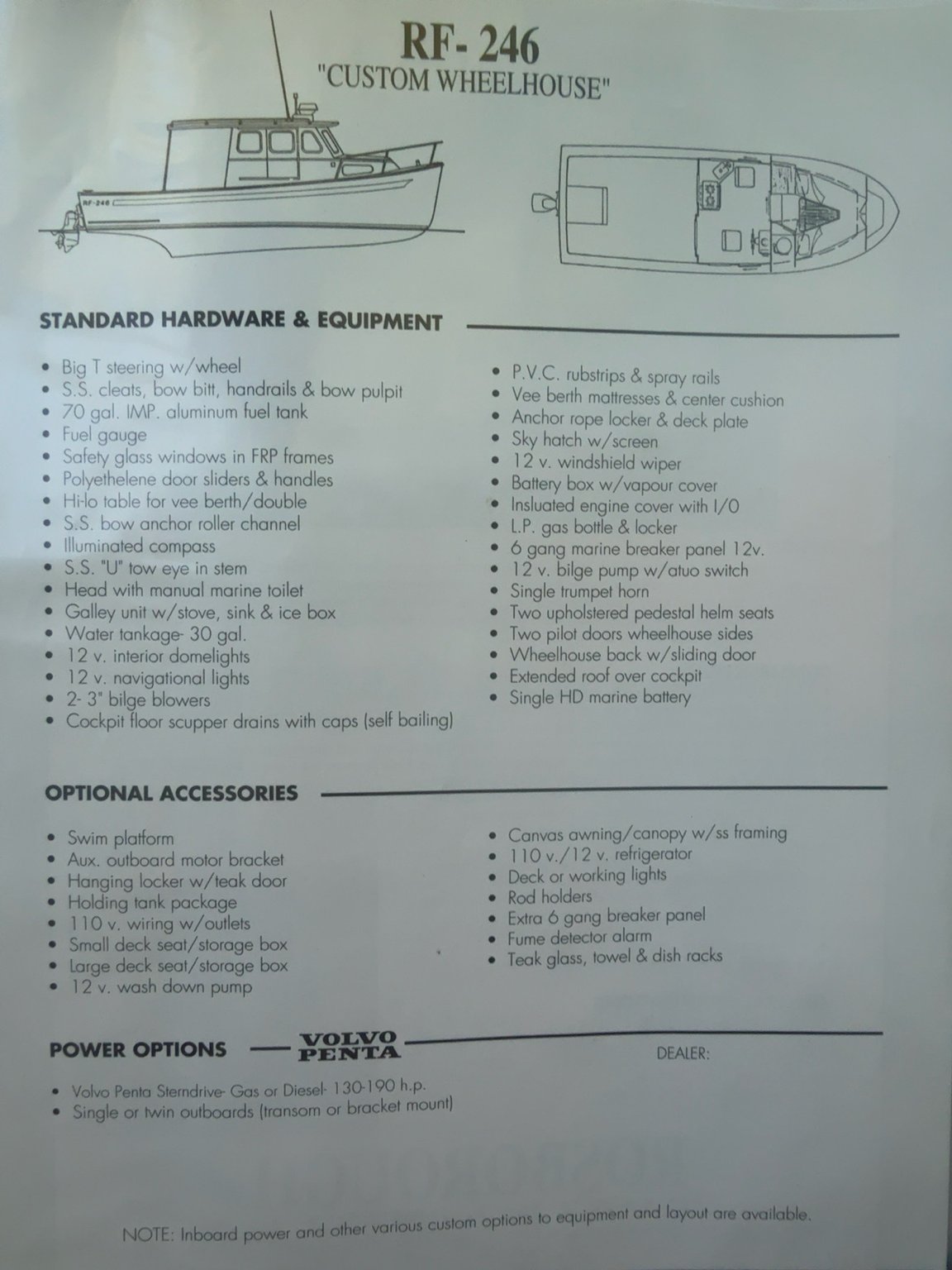
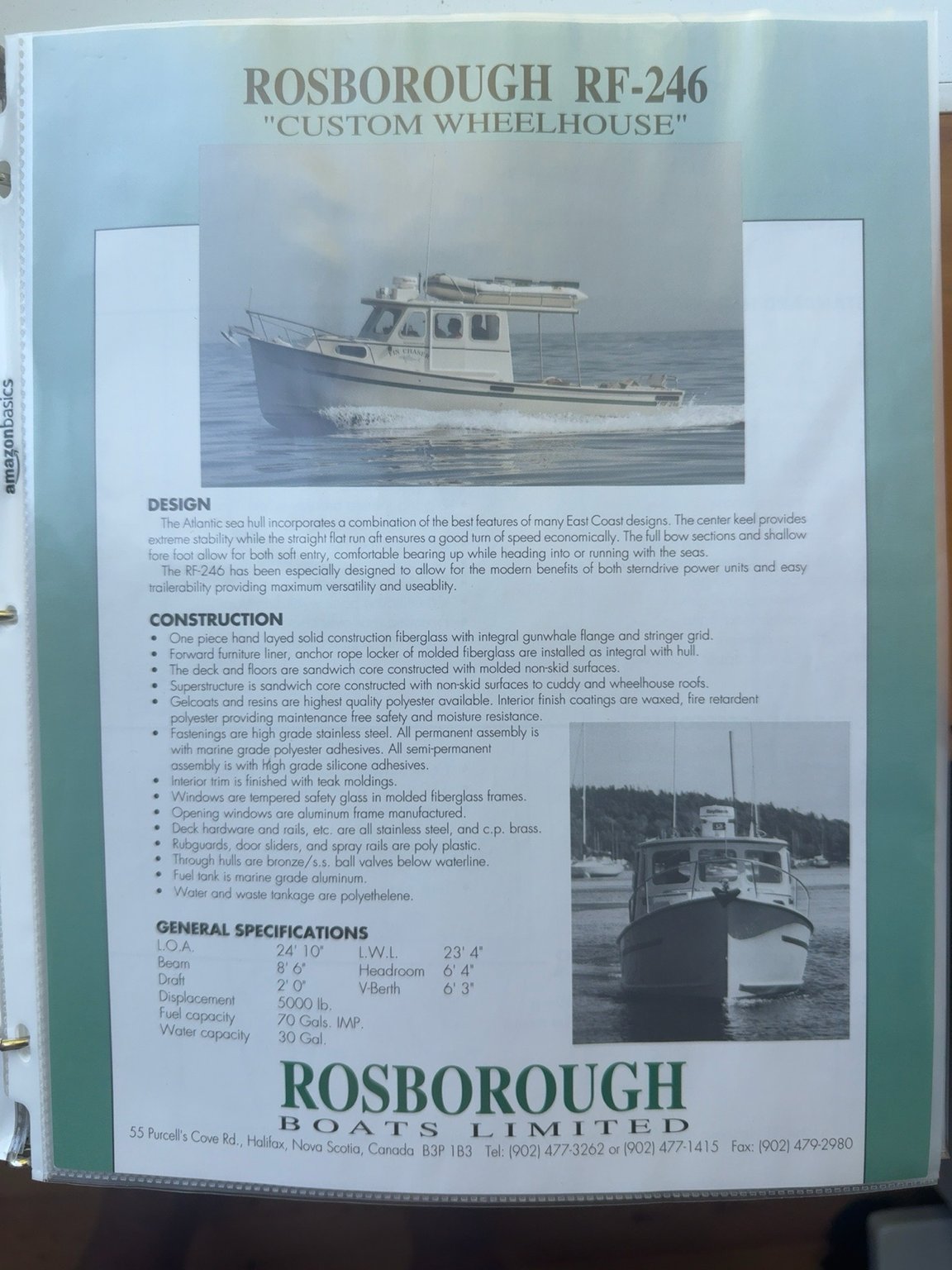
Original factory literature, Rosborough Boats Limited — Halifax, Nova Scotia.
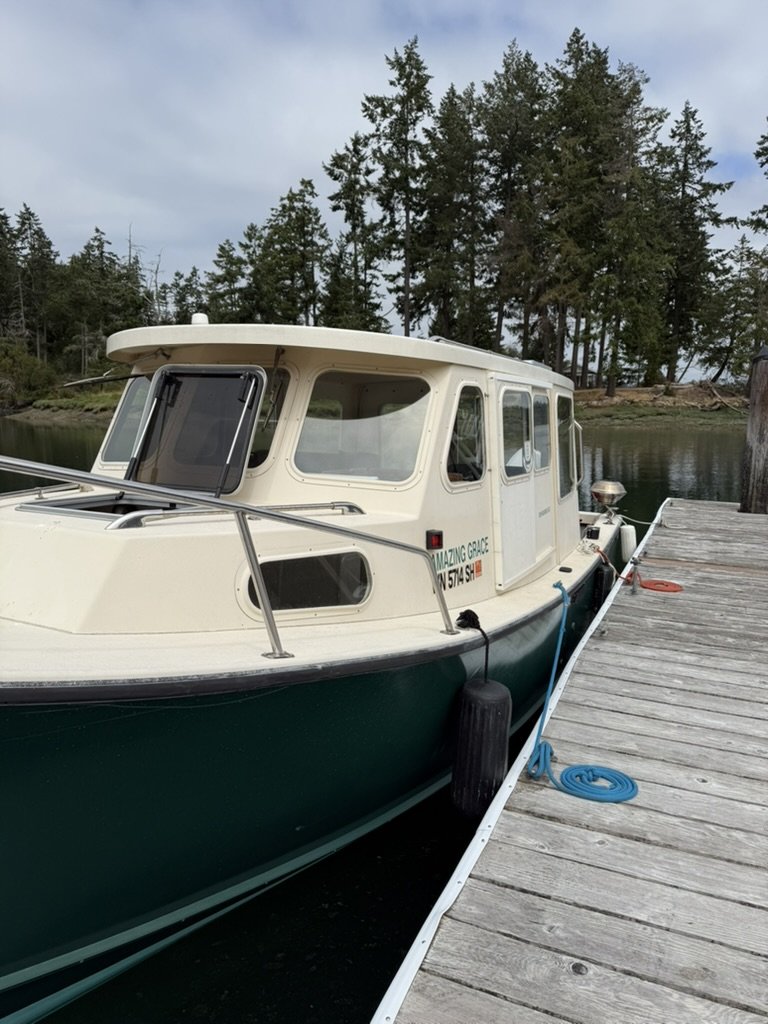
The Atlantic sea hull, the center keel, the full bow sections — the same qualities the builder described in 1994 are still what make her capable today. Everything documented on this page was built around that hull, not against it.
Original literature and reference material, kept for the record.
Original factory brochure from Rosborough Boats USA (Milton, NH) for the Sedan Cruiser configuration — the model Amazing Grace is titled as.
Download PDF →Sept/Oct 2003 — a Passagemaker feature on an RF-246 Sedan Cruiser owner, with background on the Rosborough family, the factory, and the boat's working-boat heritage.
Download PDF →How to read an RF-246 hull identification number — manufacturer code, length, hull sequence, month and year of manufacture, and model year, for both Canadian- and US-built boats.
Download PDF →Hull dimensions per Rosborough RF-246 factory literature. Tankage per the RF-246 Sedan Cruiser brochure (Rosborough Boats USA), matching Amazing Grace's titled configuration, in US gallons. Hull and maximum speed reflect the current single-engine Suzuki DF140 configuration; range to be confirmed from sea trial data.
This page will keep growing alongside the boat.
Amazing Grace represents the continued evolution of one of the Pacific Northwest's most capable small cruising boats. Every modification reflects a commitment to thoughtful engineering, simplicity, and dependable cruising rather than unnecessary complexity.